
Lenghas are traditional Indian blouses and gowns worn with a dupatta (decorative scarf). I’ve worn lenghas more when I was younger. I grew up wearing cute colorful Lenghas. At Indian festivals, I saw all the older girls and women wear saris, incredibly long fabrics draped elegantly on their bodies. Saris were a signifier of maturity and being a “big girl.”


Growing up, I saw my mother wearing beautiful saris to Indian festivals. She was my primary beacon of womanhood and beauty. My first steps to “be like her,” grown up and confident, were makeup, wearing her jewelry, and having her drape my dupattas. I loved my lenghas, but oh man, how I craved to be a woman, wearing a sari and feeling so complete as a woman.
In college, I wore my first sari for the first time at our university Diwali celebration. Of course, it was impossible without a stressful facetime call to my mother, where I desperately asked her how to drape one properly. When I entered the celebration ballroom, it felt like a dramatic Bollywood entrance where I made heads turn.
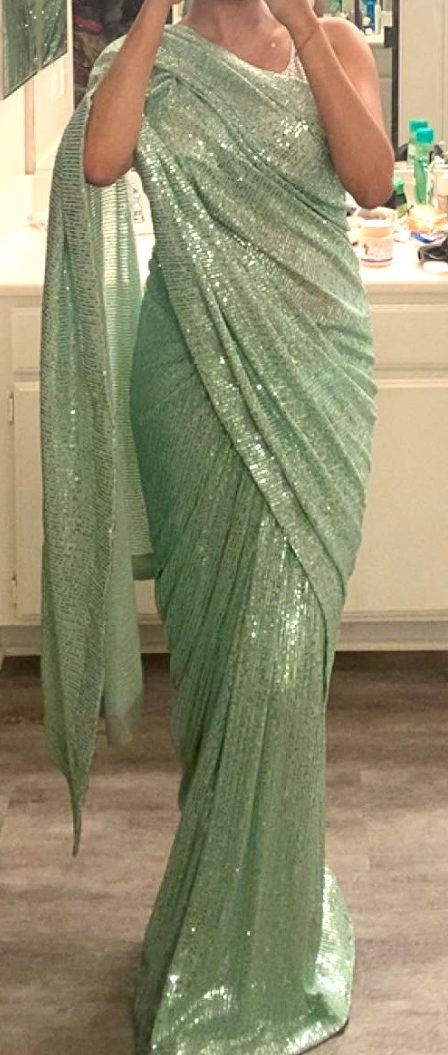

Since that day, I’ve seen many old Bollywood movies with heroines wearing saris that I never knew I needed so badly. The vintage saris, the modern saris, the party saris; I fell in love with them all. I began to understand why people in India say saris are the most beautiful thing a woman can wear.


Of course, I will never stop loving my lenghas. Lenghas signify play, mischief, and fun. However, nothing beats the elegant beauty of wearing a sari., which makes me understand the grandeur and beauty of womanhood. A sari makes me feel responsible, caring, and capable. I didn’t know an outfit could have that much power.
 J I V A W A Y S